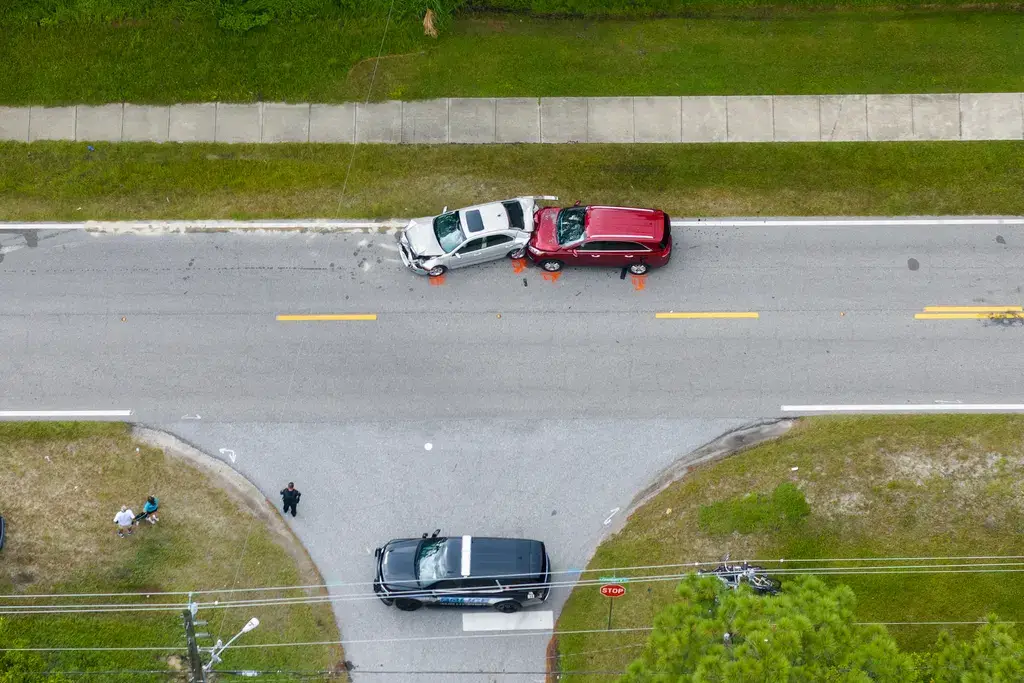
A police report can be a valuable starting point for a car accident case without being the definitive answer about who caused your crash.
Getting a police car accident report in Oklahoma requires submitting a Collision Request for Records form to Service Oklahoma, either by mail, email, or in person.
However, what that report tells you and how you can use it is not always so simple. At Colbert Cooper Hill, our Oklahoma car accident lawyers investigate crashes throughout the state from our offices in Oklahoma City, Tulsa, and Ardmore. We can show you what an accident report entails, how to get one, and how it might affect a car accident case.
What’s In a Car Accident Report?
After responding to a reportable collision, a law enforcement officer may complete an official Oklahoma traffic collision report.
The information recorded can vary depending on the crash, but a report may include:
- The drivers and vehicles involved
- Where and when the accident happened
- Insurance information
- Apparent injuries
- Road and weather conditions
- Witness information
- Traffic-control devices
The investigating officer may also add other details and prepare a diagram or narrative describing the collision.
These reports serve purposes well beyond an individual insurance claim. The Oklahoma Highway Safety Office uses motor vehicle crash reports, along with other records, to analyze traffic patterns and identify highway safety problems throughout the state.
For an idea of how many reports that can represent, Oklahoma Highway Safety Office data recorded 66,074 statewide crashes in 2021—an average of 181 crashes per day. That’s a lot of paperwork.
Of course, the most important question on any one accident victim’s mind is how to get the report from their own crash.
How Do I Get a Car Accident Report in Oklahoma?
Oklahoma collision reports are maintained through Service Oklahoma.
If you were involved in an accident and need a copy of the official collision report:
- Gather as much information about the crash as possible, including the collision date, city and county where the crash happened, case number (if you received one), and identifying information for the driver.
- Fill out a Collision Request for Records form. Reports can be requested by mail, email, or in person.
How Much Does an Oklahoma Collision Report Cost?
As of October 2026, a regular collision report costs $7. A certified copy costs an additional $3, for a total of $10.
Fees and procedures can change, so check Service Oklahoma’s current instructions when requesting your report.
How Long Does It Take for the Report to Become Available?
Don’t be surprised if you can’t obtain your report the day after your crash. Service Oklahoma warns that collision reports may take up to 30 days to populate in its system. A complicated investigation or other circumstances could also affect when information becomes available.
If your report is not available yet, that doesn’t mean you should wait to begin protecting a potential injury claim. Other evidence such as photographs, video, witness information, and vehicle evidence can become harder to obtain as time passes.
Does a Collision Report Contain Every Police Record About the Crash?
No.
Service Oklahoma handles collision report requests, but there may be additional law enforcement records associated with the investigation. The Oklahoma Department of Public Safety states that police reports issued by other agencies are generally requested from the respective police department rather than through DPS Open Records.
DPS also has separate procedures for certain materials. Depending on the circumstances, additional evidence might include dash camera footage, body camera footage, dispatch information, photographs, witness statements, third-party video, event data recorder information, or supplemental investigative materials.
Some records may require a separate records request, and certain investigative documents could require a subpoena.
In other words, obtaining the standard collision report may not mean you have obtained every piece of evidence related to the crash.
Why Is an Accident Report Important in a Personal Injury Claim?
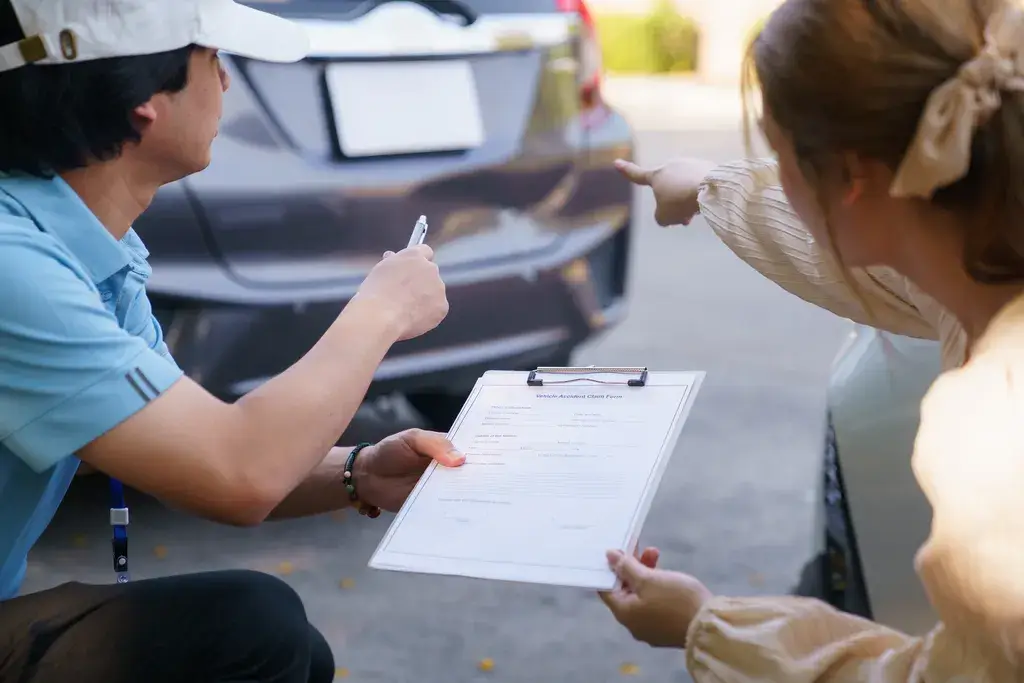
An accident report can provide a useful snapshot of what law enforcement found shortly after the collision, and that’s important.
You can’t expect all the evidence of a crash to exist as it was months later. Vehicles may have been repaired or destroyed. Skid marks may have disappeared. Businesses may have deleted surveillance footage. Witnesses may struggle to remember precise details.
A report can also help your attorney identify important leads. If the report lists witnesses, those people may need to be contacted. If it identifies a commercial vehicle, additional company records may exist. If an officer notes a traffic citation, that may point toward conduct that requires further investigation.
The report may also help confirm basic information such as the identity of the other driver, their insurer, the responding law enforcement agency, and the vehicles involved. Insurance adjusters commonly look at these same details when deciding how to approach a claim.
Does the Police Report Decide Who Was at Fault?
No.
A police report might contain observations about the crash, contributing circumstances, citations, or a narrative that suggests how the collision occurred. Insurance adjusters may rely heavily on those statements.
But the investigating officer does not ultimately decide civil liability.
The officer may not have witnessed the crash. They likely arrived later and reconstructed what happened from driver statements, witnesses, vehicle positions, visible damage, debris, skid marks, and other available evidence.
That information can be useful, but it can also be incomplete or inaccurate.
Oklahoma courts have recognized this problem for decades. In cases involving vehicle accidents, Oklahoma appellate courts have cautioned against treating an investigating officer’s hearsay-based opinions and conclusions about responsibility as proof of who legally caused a crash.
More recently, a 2025 decision from the U.S. District Court for the Northern District of Oklahoma made a similar distinction in a truck crash lawsuit. The court explained that factual findings within an official accident report could be treated differently from opinions about causation or which party was legally at fault.
What If the Accident Report Contains an Error?
Start by determining exactly what is wrong. There is an important difference between an objective error and a disagreement about an officer’s interpretation.
For example, a misspelled name, incorrect insurance information, wrong vehicle description, or inaccurate address may be relatively straightforward to document. A disagreement over how the collision happened can be more complicated.
Do not alter the document yourself or assume that arguing with the insurance adjuster will fix the issue. Contact the law enforcement agency that prepared the report and ask what procedures it uses for supplemental reports, corrections, or additional information.
If the disputed issue affects fault or your ability to recover compensation, it may also be time to speak with a car accident lawyer. Your attorney can investigate independently instead of relying entirely on the report.
What Other Evidence Can Show What Really Happened?
Police reports are only one component of a car accident case.
Depending on the collision, an attorney may investigate photographs of vehicle damage, scene photographs, surveillance cameras, dashcam footage, witness testimony, traffic camera evidence, vehicle event data, cell phone records, medical records, physical evidence from the roadway, expert reconstruction analysis, or records from a commercial driver’s employer.
Building a strong case becomes especially important under Oklahoma’s comparative negligence rules. If an insurance company can successfully argue that you share responsibility for the accident, it may try to reduce what it pays you.
You should not allow one line in an accident report to become the only evidence used to tell your story.
Should I Give the Accident Report to the Insurance Company?
Your own insurance carrier will typically investigate the crash and may obtain the report itself. The other driver’s insurer may do the same. What deserves more caution is giving an insurance company additional statements about the report or the collision.
An adjuster might ask why your description differs from something written by the responding officer. They may request a recorded statement while you are still recovering or even suggest that a report establishes fault when the surrounding evidence is much more complicated.
Before giving a detailed recorded statement to the other driver’s insurance company, consider speaking with an attorney.
Remember: the adjuster’s job is to investigate the claim for the insurer. Your lawyer’s job is to protect you.
BLOG: How Do Adjusters Determine Who is at Fault in a Car Accident?
Can I Still Have a Case If the Police Report Blames Me?
Potentially, yes.
A police report does not automatically eliminate a personal injury claim. If you believe the report is wrong, an attorney can examine why the officer reached that conclusion and determine whether other evidence tells a different story.
At the same time, don’t ignore the report. An unfavorable report can influence an insurer’s approach to the claim, which makes investigating and addressing its weaknesses even more important.
RELATED: What to Do If You’ve Been Blamed for a Crash That Wasn’t Your Fault
Do I Need a Police Report to File a Car Accident Claim?
A collision report can make a claim easier to investigate, but the absence of one does not necessarily mean there is no case. There may still be photographs, witness statements, medical records, vehicle damage, video footage, insurance information, and other evidence establishing what occurred.
However, accidents become harder to reconstruct as time passes. If law enforcement did not respond or no report appears to exist, speak with an attorney promptly about what evidence can still be preserved.
Why You Should Get the Report
If you were injured in an Oklahoma car accident, obtaining your collision report is an important step.
Read it carefully. Make sure basic information is accurate. See what the officer documented about the drivers, vehicles, witnesses, roadway, and circumstances of the collision.
Then remember what that document represents. It is an early account of the crash, not necessarily the complete account.
At Colbert Cooper Hill, our Oklahoma car accident lawyers don’t stop investigating simply because an accident report has already been written. We can obtain the report, examine the evidence behind it, search for evidence that may have been missed, deal with the insurance companies, and build a case based on what the full investigation shows.
With offices in Oklahoma City, Tulsa, and Ardmore, we represent car accident victims throughout Oklahoma.
If you were injured in a crash and have questions about your accident report, fault, or the insurance company’s handling of your claim, contact Colbert Cooper Hill for a free case review.
The content provided here is for informational purposes only and should not be construed as legal advice on any subject.