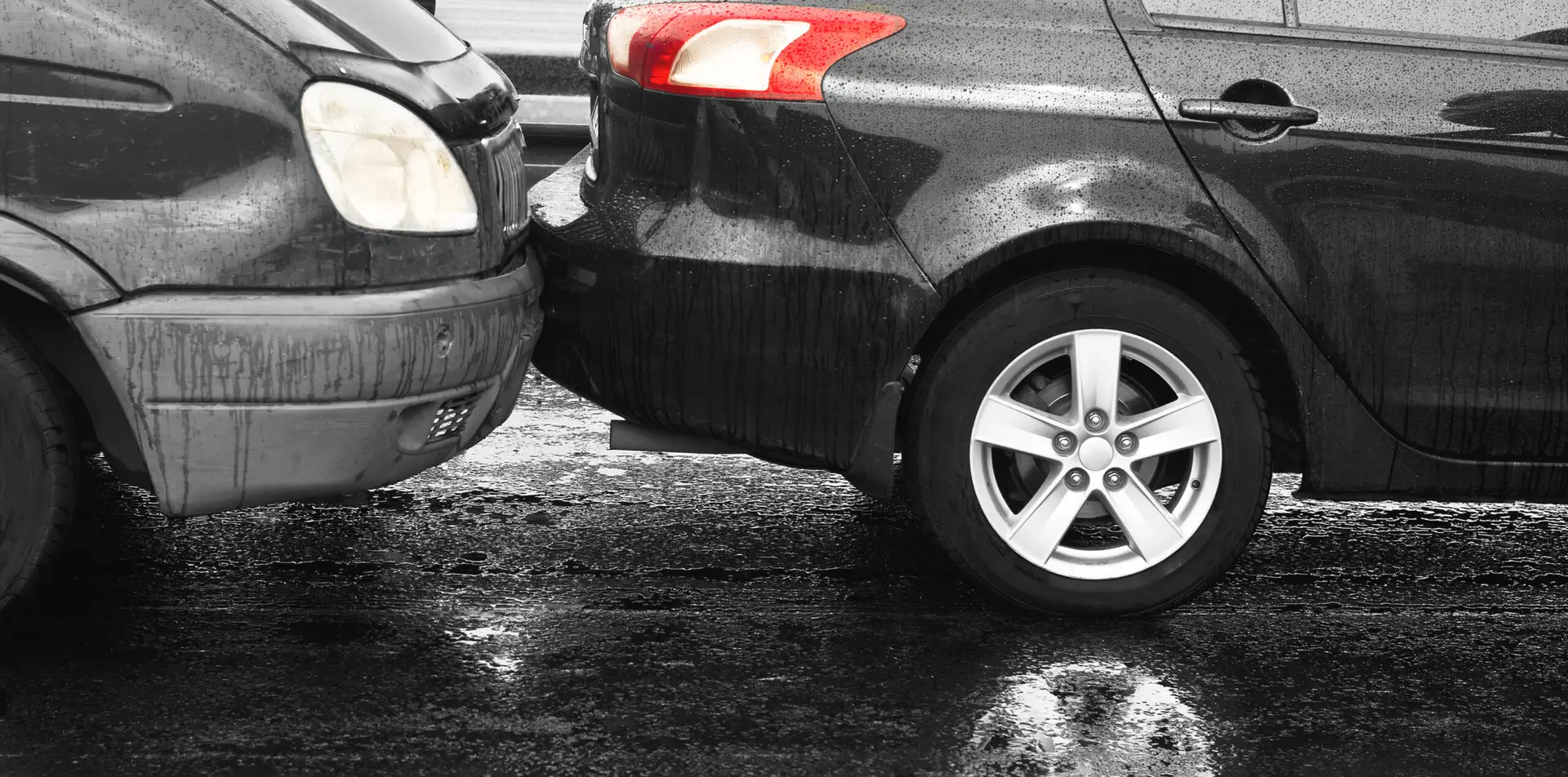
Oklahoma weather is unpredictable. One minute you’re driving under clear skies, and the next you’re running into terrible conditions. Severe thunderstorms, blinding dust, and winter storms can turn our highways and backroads dangerous in seconds.
If you were involved in a car accident during bad weather, you may be wondering:
- “Does the weather change who’s at fault?”
- “Will the insurance company deny my claim because of the conditions?”
- “How do I prove the other driver was still negligent?”
Our Oklahoma City car accident attorneys hear these questions often. The answers ultimately come down to two main points:
- Poor weather does NOT excuse negligent driving.
- And it does NOT erase someone’s potential responsibility for causing a crash.
In Oklahoma, drivers are legally required to adjust their driving to the conditions around them. So even if rain, fog, snow, or ice played a role in your accident, negligence can—and often does—still apply.
Here’s what you need to know about weather-related accidents in Oklahoma, how insurers may handle your claim, and how The Wolf Pack™ investigates the truth to fight for the compensation you deserve.
How Weather Conditions Contribute to Car Accidents in Oklahoma
Bad weather doesn’t cause accidents. Unsafe driving in bad weather does.
While the weather might make the roads more dangerous, drivers are still expected to use reasonable caution. When they don’t, they can be held liable.
Let’s break down how different weather conditions affect accidents:
Rain and Wet Roads
Rain is one of the most common weather factors in Oklahoma crashes. Wet pavement reduces traction, increases stopping distances, and raises the risk of hydroplaning.
However, when rain is present, drivers are expected to:
- Reduce their speed
- Increase following distance
- Turn on headlights
- Avoid sudden braking or sharp turns
- Keep tires in safe condition
If a driver loses control during rain because they were driving too fast or following too closely, it will likely be attributed to negligence rather than an unavoidable accident.
Insurance companies may try to blame “slick roads,” but ultimately the question becomes: Did the driver take reasonable steps to drive safely?
If not, they can still be held at fault.
Fog and Reduced Visibility
Thick Oklahoma fog can be dangerous, especially early in the morning or near bodies of water. It can make it difficult to see brake lights, intersections, curves, or hazards.
Drivers must:
- Turn on headlights (not high beams)
- Slow down significantly
- Avoid tailgating
- Stay in their lane
- Use extra caution approaching intersections and merging lanes
If a driver crashes because they were going too fast for the visibility conditions, they may be held responsible even if fog was present. “I couldn’t see” is not a legal defense for hitting someone.
Snow, Ice, and Black Ice
Although Oklahoma doesn’t get snow every week, when we do, the roads become extremely dangerous. Ice, sleet, and snow drastically reduce traction and lead to:
- Rear-end collisions
- Jackknife accidents
- Cars sliding through intersections
- Multi-vehicle pileups
Drivers must slow down to a safe speed for the conditions, even if that means driving far below the posted limit.
Common negligent behaviors in winter conditions include:
- Driving at normal speeds despite icy roads
- Accelerating or braking too quickly
- Not leaving enough room to stop
- Using cruise control on slick surfaces
- Driving on bald or worn tires
When a driver loses control due to ice, insurers often argue it was “unavoidable.” But in reality, most winter-weather accidents are avoidable when drivers take reasonable precautions.
Wind, Thunderstorms, and Tornado Conditions
Oklahoma’s severe weather—including straight-line winds and sudden downpours—can create dangerous driving conditions quickly.
Drivers must respond to these hazards by:
- Slowing down
- Keeping both hands on the wheel
- Avoiding driving directly beside large trucks
- Pulling over safely if visibility drops to zero
If a driver chooses to speed, weave through traffic, or ignore commercial truck wind dangers, they may still be held liable for the wreck.
Actual tornados can be a different situation, as the risks of being in a vehicle near a tornado can be substantial. The Department of Homeland Security offers advice if a tornado touches down while you are driving.
Does Bad Weather Change Who’s At Fault in a Car Accident?
The short answer is no. Bad weather does not eliminate fault.
Oklahoma law requires drivers to operate their vehicles safely given the conditions. This is called the “reasonable person standard.”
Even in heavy rain or snow, drivers must:
- Slow down
- Stay alert
- Maintain their lane
- Leave enough distance to stop safely
- Keep their vehicle properly maintained
- Use headlights
- Avoid distractions
If they fail to do any of these things and cause a crash, they can be held negligent, even if the weather was terrible.
And the insurance companies know this.
How Insurance Companies Handle Weather-Related Claims
Insurance companies often love blaming the weather. They may try to argue your accident was:
- “Unavoidable”
- “A no-fault event”
- “Caused by an act of God”
They might refuse to pay or try to reduce your settlement by claiming:
- The crash wasn’t the other driver’s fault
- You were partially to blame
- The conditions were outside anyone’s control
Our Oklahoma car accident attorneys know these tactics. We push back hard. We investigate every detail and uncover the truth the insurance companies want to ignore.
RELATED: What to Do if Your Car Accident Insurance Claim is Denied in Oklahoma
How Negligence Still Applies in Bad Weather
Even in poor weather conditions, drivers can be negligent by:
- Speeding
- Following too closely
- Driving with worn tires or bad brakes
- Failing to turn on headlights
- Being distracted
- Failing to clear ice or snow from their windshield
- Ignoring road closure or warning signs
- Following too closely behind big trucks
- Failing to pull over if visibility drops to unsafe levels
Even if weather contributed to the crash, negligence can still be proven through the gathering an analysis of evidence including:
- Skid marks
- Speed calculations
- Crash reconstruction
- Eyewitness testimony
- Dashcam or traffic camera footage
- Vehicle data recorders
- Road condition reports
This is where having a strong legal team matters.
RELATED: I Was a Passenger in a Car Accident. How Do I Navigate a Claim?
How The Wolf Pack™ Investigates Weather-Related Car Accidents
At Colbert Cooper Hill, we don’t let insurance companies get away with blaming the weather. We run a full investigation to uncover the truth.
Our Oklahoma car accident attorneys look into:
1. Road and weather conditions at the exact time of the crash
We examine:
- Oklahoma weather service data
- Precipitation levels
- Visibility levels
- Road temperature
- Wind speeds
- Icy patches or warnings
2. The other driver’s behavior
Did they:
- Slow down appropriately?
- Brake suddenly?
- Drive on bald tires?
- Use headlights?
- Follow too closely?
- Speed into a curve or intersection?
Weather doesn’t absolve these failures.
3. Vehicle condition
We look at:
- Tire tread depth
- Brake condition
- Steering system issues
- Traction control systems
- Headlights and taillights
A poorly maintained vehicle can be a major factor in weather crashes.
4. Data from the vehicle’s black box
Modern vehicles record data like:
- Speed
- Throttle position
- Brake usage
- Steering angles
This helps us show whether negligence occurred.
5. Eyewitness accounts and video footage
We check:
- Dashcams
- Security cameras
- Traffic cams
- Cell phone videos
- Eyewitness statements
6. Accident reconstruction experts
When necessary, we bring in experts who analyze:
- Skid marks
- Vehicle damage
- Impact angles
- Road friction
- Visibility levels
We leave no stone unturned.
Because when the insurance company blames the sky, we point to the facts.
RELATED: How Do You Determine Truck Accident Liability in Oklahoma?

What Compensation Can You Recover After a Weather-Related Accident?
Even if weather played a role, you may still recover compensation for:
- Medical bills
- Lost wages
- Pain and suffering
- Property damage
- Future medical treatment
- Loss of earning capacity
- Emotional distress
- Permanent disability or disfigurement
And if the other driver was reckless—like speeding on ice or in the rain—your case may be even stronger.
Injured in a Weather-Related Accident? Call The Wolf Pack™ Today
Whether rain, fog, snow, or ice played a role in your crash, you still have rights. We’re here to protect them.
Call Colbert Cooper Hill at 405-218-9200 or fill out our online form for a free case review. We’ll discuss the circumstances around your incident and help you determine your next best steps forward.
The content provided here is for informational purposes only and should not be construed as legal advice on any subject.