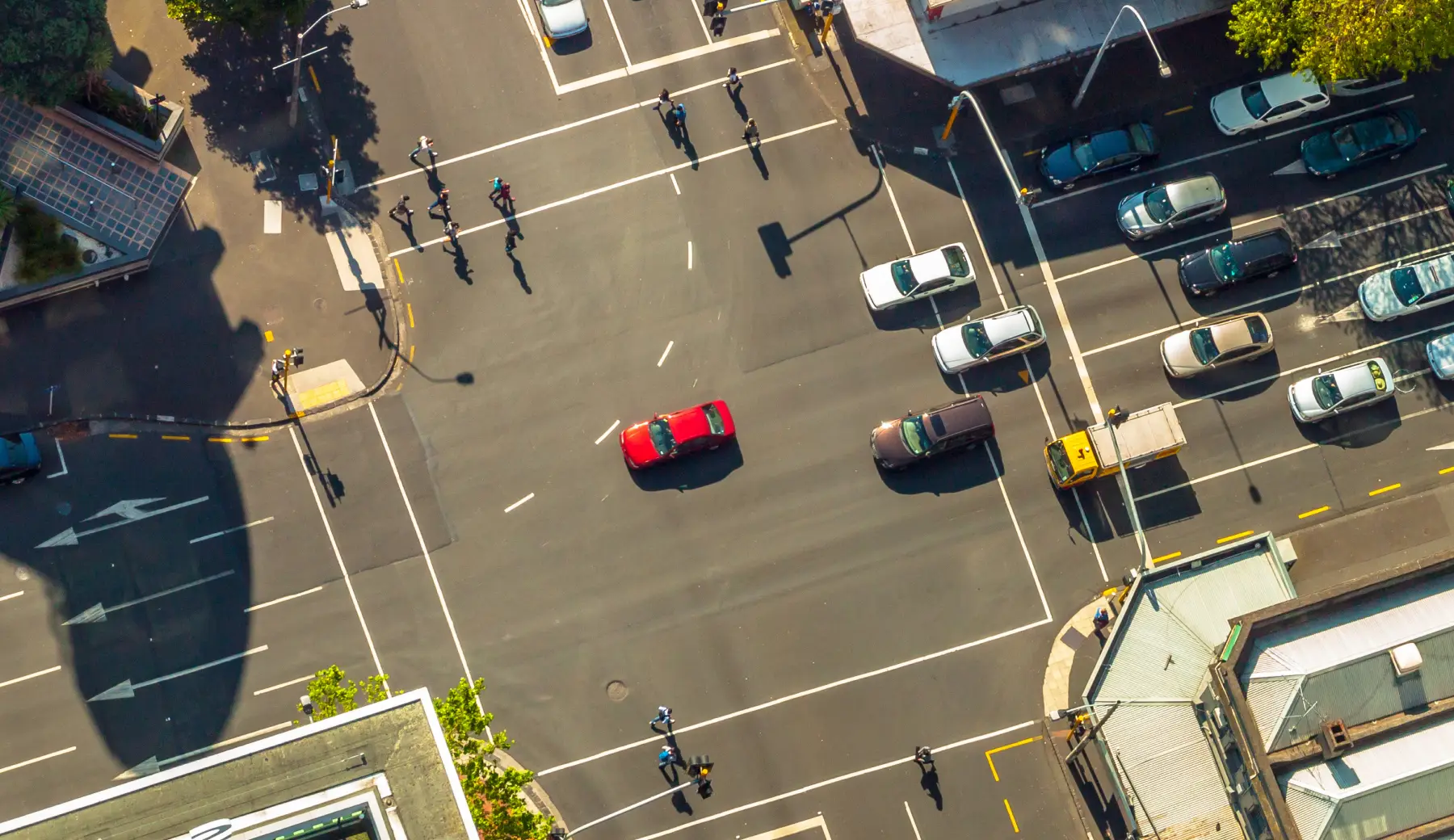
Intersections can be dangerous places. According to the U.S. Department of Transportation, roughly half of all traffic fatalities and injuries occur “at or near” one.
But why? In this blog, we’ll take a closer look at what causes intersection crashes, why it isn’t always easy to prove that the other driver was at fault, and how an experienced car accident attorney (like those at Colbert Cooper Hill) can help crash victims get the fair compensation they deserve.
Immediate and Underlying Causes
Because intersections are complex environments where cars must cross paths, it’s extremely important for drivers to follow the rules of the road, obey traffic signals, and behave in a predictable way. When that doesn’t happen, car accidents are the far-too-frequent result. By far, the leading cause of intersection accidents is driver error.
When answering the question of why intersection accidents occur, it can be helpful to consider both immediate causes and underlying causes. Immediate causes refer to the specific traffic rule that was broken, which immediately led to the crash. Some of the most common immediate causes include:
- Running a red or yellow light.
- Disregarding signage, for example by failing to come to a complete stop and yield to cross traffic at a stop sign or failing to yield the right of way at a yield sign.
- Failing to judge the speed or location of oncoming traffic, for example by making a turn in front of an oncoming car when you don’t have enough time to complete the turn safely.
Left turns are especially dangerous, since they take longer to perform and require drivers to cross multiple lanes of oncoming traffic and cross traffic.
Underlying causes, on the other hand, help explain the why behind an intersection crash. Examples include:
- Distracted driving. If a driver is using their cell phone, eating, carrying a conversation with someone in the back seat, or otherwise not focusing on the road, it’s all too easy to miss a traffic signal.
- Impaired driving. When focus and reaction time are slowed by alcohol or drugs, drivers are less likely to accurately judge the location and speed of oncoming traffic (not to mention their own driving).
- Speeding. When a driver is traveling too fast, they have less time to react to changing traffic conditions and unexpected actions by other drivers or pedestrians.
- Poor visibility. Bad weather, road glare, and nighttime driving can make it more difficult to see traffic and pedestrians or gauge their speed.
- Poor road conditions. Slippery roads or bad pavement can make it harder for vehicles to stop in time. Bad road conditions can also result in slower-than-expected acceleration, increasing the time it takes for a vehicle to clear the intersection.
- Poor infrastructure. Intersection safety can also be compromised by road design factors such as insufficient signage or obstructed views.
Determining Fault After an Intersection Accident
If you’ve been in a car accident at an intersection, it might be perfectly obvious to you that the other driver was responsible. However, proving that to an insurance company (or jury) won’t necessarily be straightforward. Far too often, we have seen intersection accident cases turn into “he said, she said” situations.
The insurance company responsible for paying your claim will not take your word for it. You will need to provide evidence that supports your version of events. At the same time, they will be looking for any evidence they can find to pin at least part of the blame on you.
If the insurance company thinks you are partly responsible, they will usually offer far less to settle your case. For example, they might claim that, while their driver may have made an illegal turn, you were also speeding and could have avoided the crash if you had been following the traffic laws yourself.
The best way to protect your legal rights and collect the evidence you need is by working with an experienced car accident lawyer. Some of the tactics we can use include:
- Obtaining “black box” data. Almost every vehicle is equipped with an event data recorder (EDR), which keeps track of things like vehicle speed, when (or whether) the brakes were applied, steering input, and other important factors in the moments before the crash.
- Obtaining camera footage. There may be existing security camera or dash camera footage that captured the crash, depending on where it took place and who was in the area.
- Obtaining cell phone records. Mobile phone metadata can tell us whether someone was texting or on the phone immediately before the crash. If the records show that the driver was on their phone at the time and location of the crash, we may request phone usage data from further before the crash to determine if there is a pattern of distracted driving.
- Working with an accident reconstruction expert. Accident reconstructionists may use any of the above evidence—as well as the police report, photos of the crash scene and vehicle damage, light signal timing data, etc.—to create a full report explaining the most likely contributing causes of the crash, including who was at fault.
- Following up with eyewitnesses. Eyewitness accounts can be extremely important, especially if the other involved driver isn’t being fully honest about what happened. If possible, get contact information from anyone who witnessed the crash so your attorney can ask them detailed questions later.
RELATED POST: How Do Adjusters Determine Who Is at Fault in a Car Accident?
Contact a Car Accident Lawyer as Soon as Possible After an Intersection Accident
Evidence to prove a personal injury case doesn’t last forever. And if you don’t take steps to preserve it, you could lose it. For example:
- Vehicle EDR information will only be available if the black box hasn’t overwritten it and the owner hasn’t already gotten rid of the car.
- Security camera footage can be deleted.
- Eyewitnesses’ memories can fade with time.
If you or someone you love has suffered serious injuries in an intersection accident in Oklahoma, we strongly urge you to call us as soon as you can to schedule a free initial case review. If we take your case, our attorneys will get to work right away on securing the critical evidence, performing a thorough investigation of the root causes of the crash, and fighting to get you the most money possible for your claim.
Contact the Wolf Pack™ at Colbert Cooper Hill by giving us a call or filling out our online form. Don’t wait. Get the help you need today.