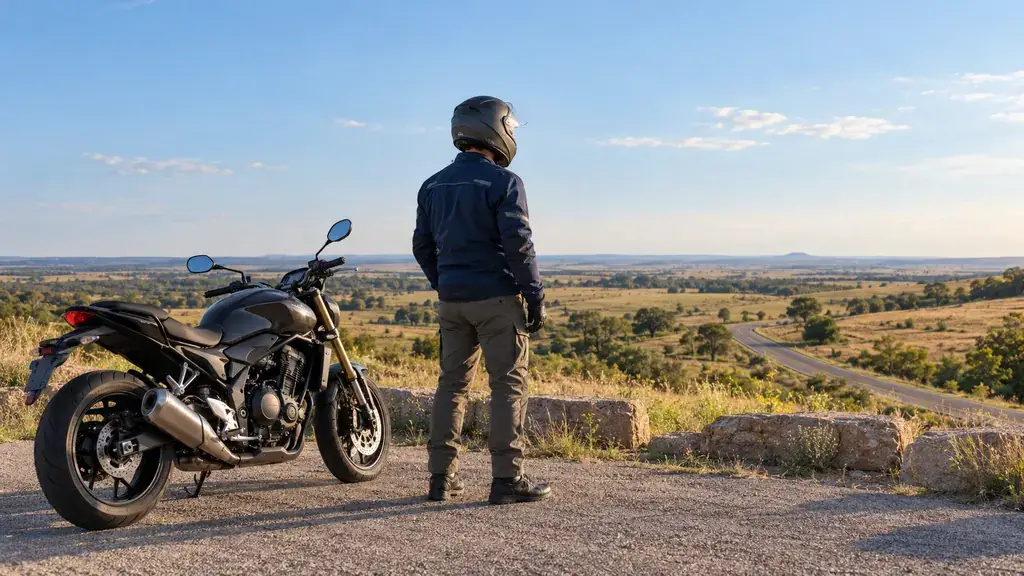
Motorcycle riders in Oklahoma have considerably more freedom when it comes to helmet use than riders in many other states.
But if you are involved in an accident, whether you were wearing a helmet can quickly become more than a safety question. Insurance adjusters may ask about it. Defense attorneys may try to focus on it. And injured riders sometimes worry that riding without a helmet means they have automatically damaged—or even lost—their personal injury claim.
But that’s not how Oklahoma law works.
At Colbert Cooper Hill, our Oklahoma motorcycle accident lawyers help injured riders throughout the state understand their rights and push back when insurance companies unfairly try to blame them for crashes someone else caused.
Here’s what riders should know about motorcycle helmet laws in Oklahoma.
Does Oklahoma Require Motorcycle Riders to Wear Helmets?
Oklahoma’s motorcycle helmet requirements are found in 47 O.S. § 12-609.
The law states that a person under 18 years old may not operate or ride on a motorcycle without properly wearing a crash helmet that complies with the applicable federal safety standard.
Once a rider reaches age 18, the statute no longer requires that person to wear a helmet.
What Kind of Helmet Is Required for Riders Under 18?
A minor cannot satisfy Oklahoma’s helmet law simply by wearing any type of headgear.
Section 12-609 requires a helmet that meets the standards established by 49 C.F.R. § 571.218, the federal motorcycle helmet safety standard.
Simply put, Oklahoma riders subject to the helmet requirement should use properly certified motorcycle helmets designed to satisfy U.S. Department of Transportation safety requirements.
Even though adult riders may legally choose not to wear helmets, the Oklahoma Highway Safety Office continues to encourage helmet use as an important safety measure.
Does Oklahoma Require Eye Protection?
Helmet laws are not the only motorcycle safety equipment laws riders need to know about.
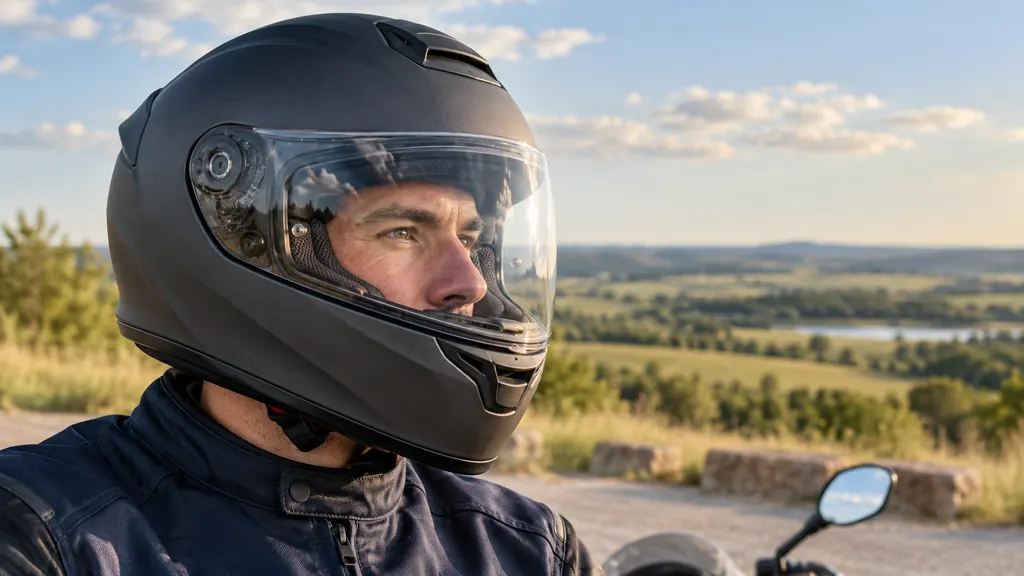
Under the same Oklahoma statute, motorcycles generally must have a windshield of sufficient size and quality to protect the operator from foreign objects. If the motorcycle doesn’t have an adequate windshield, the operator must wear qualifying goggles, protective eyewear, or a face shield.
The statute specifies that protective eyewear must satisfy ANSI Standard Z87.1 and provide positive retention.
Note that this requirement is not age-specific the way the helmet law is. An adult may be legally permitted to ride without a helmet, but that does not mean the operator can ignore Oklahoma’s separate windshield and eye-protection requirements.
Can Not Wearing a Helmet Hurt My Oklahoma Motorcycle Accident Case?
For an adult rider, simply not wearing a helmet doesn’t place the liability for a motorcycle accident on them.
Consider a common example: A motorcyclist is riding legally through an intersection. A driver approaching from the opposite direction fails to yield and turns left directly into the motorcycle’s path. Whether the rider was wearing a helmet did not cause the driver to make that unsafe turn.
The central liability questions should instead concern issues such as:
- Who had the right of way?
- Did the other driver fail to yield?
- Was someone speeding?
- Was a driver distracted?
- Did someone run a traffic signal?
- Was alcohol or drug impairment involved?
- What does the physical evidence show?
Insurance companies may still attempt to make helmet use part of the conversation because they know motorcycle riders sometimes face unfair stereotypes. Fortunately, Oklahoma courts have directly addressed this issue.
What Did Johnston v. Stacy Say About Motorcycle Helmets?
In Johnston v. Stacy, a 2016 published Oklahoma Court of Civil Appeals decision, a motorcycle rider appealed after evidence that he was not wearing a helmet was introduced during a negligence trial.
The court examined whether helmet nonuse should have been admitted. It concluded that Oklahoma had no established tradition allowing helmet nonuse to be introduced to establish liability or contributory negligence and held that such evidence is generally inadmissible for those purposes.
The court also considered whether helmet nonuse could be introduced simply to argue that a rider’s injuries would have been less serious had a helmet been worn.
Drawing on Oklahoma Supreme Court precedent involving seat belts, the Court of Civil Appeals concluded that, absent different direction from the Legislature or Oklahoma Supreme Court, evidence of helmet nonuse was not currently admissible as a damages argument either.
An insurance company should not be able to shortcut the real investigation into an accident by simply saying, “The rider wasn’t wearing a helmet, so the rider must share the blame.”
However, be careful about reading any court decision too broadly.
Johnston provides important protection against general attempts to use helmet nonuse to establish rider fault, but every motorcycle case involves its own facts.
The safest approach after a serious accident is to preserve the helmet and all other riding gear, if applicable, and let an attorney evaluate how Oklahoma law applies to the specific claim.
What If the Injured Rider Was Under 18 and Wasn’t Wearing a Helmet?
This situation deserves individual legal analysis.
Unlike adult riders, motorcycle operators and passengers under 18 have a statutory obligation to wear qualifying helmets in Oklahoma. An insurance company might therefore attempt to argue that a minor’s failure to comply with the helmet statute should affect some aspect of the case.
But even then, two different issues must be considered.
- Who caused the accident? Not wearing a helmet does not make another driver run a red light, fail to yield, drive drunk, or make an unsafe lane change.
- What injuries and damages resulted from the accident? That issue may involve different medical and legal questions, particularly if the rider suffered a head or brain injury.
Every potential case should be evaluated carefully by an experienced motorcycle accident attorney.
RELATED: What Causes Most Motorcycle Accidents in Oklahoma?
How Does Oklahoma’s Comparative Negligence Law Affect Motorcycle Cases?
Oklahoma follows a modified comparative negligence system.
Generally, an injured person may still recover compensation when they share some responsibility for an accident if they are 50% or less at fault. However, the award can be reduced proportionately according to the rider’s percentage of fault. A rider who is more than 50% responsible generally cannot recover anything.
For example, suppose a jury determines:
- Total damages: $200,000
- Other driver: 80% at fault
- Motorcycle rider: 20% at fault
The rider’s recovery could generally be reduced by the rider’s 20% share of negligence, leaving $160,000.
The important point is that comparative negligence should focus on conduct that actually contributed to the accident or damages under applicable law. It should not be swayed based on stereotypes about motorcycle riders.
RELATED: What is an Average Motorcycle Accident Settlement in Oklahoma?
Insurance Companies May Still Try to Use Helmet Nonuse Against You
Courtroom evidence rules do not necessarily stop an insurance adjuster from raising the subject during settlement negotiations. After a serious motorcycle crash, an adjuster may ask:
- Were you wearing a helmet?
- What type of helmet was it?
- Was the helmet properly fastened?
- Why weren’t you wearing one?
- Did your head strike the road?
- Had you received motorcycle safety training?
Some of these questions may be legitimate factual inquiries. Others may be attempts to make the rider appear irresponsible. Statements made early in the claims process can later become part of the insurer’s argument for paying you less.
If you find yourself in such a situation, don’t guess about medical causation or agree that wearing different gear would have prevented an injury simply because an adjuster suggests it. It is perfectly reasonable to be honest and say that you don’t know the answers to these questions.
Preserve Your Helmet and Riding Gear After an Accident
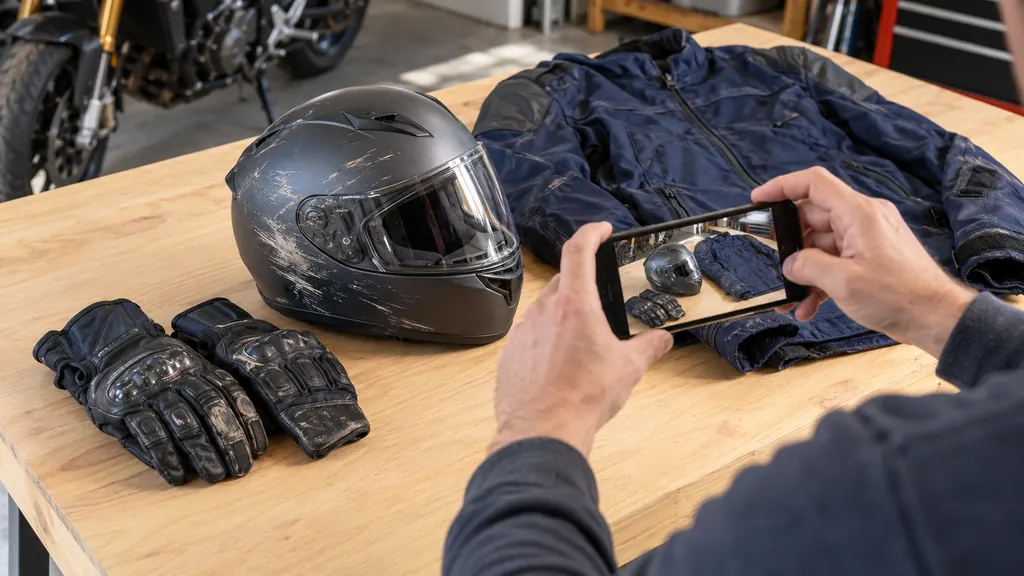
If you were wearing a helmet, do not throw it away after the crash. Preserve:
- The helmet
- Visor
- Jacket
- Gloves
- Boots
- Pants
- Protective armor
- Motorcycle
- Damaged accessories
Photograph the gear before cleaning or repairing anything.
Damage to a helmet or protective clothing can help show where and how your body struck the ground, another vehicle, or another object. It can also provide evidence about the severity and mechanics of the collision.
Your motorcycle itself may contain equally important evidence.
What Should You Do After an Oklahoma Motorcycle Accident?
After a serious motorcycle crash:
- Call 911 and get medical treatment. Your health comes first.
- Report the crash to law enforcement.
- Photograph the scene if you safely can.
- Get witness information.
- Preserve your motorcycle, helmet, and riding gear.
- Follow your doctor’s treatment recommendations.
- Be cautious about recorded insurance statements.
- Talk with an Oklahoma motorcycle accident lawyer before accepting a settlement.
Motorcycle injuries can require surgery, rehabilitation, long-term medical care, and extended time away from work. A quick settlement may not account for those future losses.
Frequently Asked Questions About Helmet Laws in Oklahoma
Can I Legally Ride a Motorcycle Without a Helmet in Oklahoma?
Yes, if you are 18 or older, Oklahoma’s motorcycle helmet statute does not require you to wear a helmet. Operators and passengers under 18 must wear compliant protective headgear. Keep in mind that motorcycle operators may also be subject to separate eye-protection requirements if their motorcycle does not have an appropriate windshield.
Can I File an Injury Claim If I Wasn’t Wearing a Helmet?
Yes. An adult’s lawful decision not to wear a helmet does not automatically prevent them from pursuing a personal injury claim. In Johnston v. Stacy, the Oklahoma Court of Civil Appeals held that evidence of helmet nonuse is generally inadmissible to establish liability or contributory negligence.
Your case should focus on what caused the collision and the injuries you suffered.
Can an Insurance Company Reduce My Settlement Because I Wasn’t Wearing a Helmet?
An insurer may attempt to raise helmet nonuse during settlement negotiations, but that does not make the argument legally correct. Oklahoma’s Johnston decision provides strong authority against using adult helmet nonuse as evidence of comparative negligence and, under the reasoning of that case, as a general damages-reduction argument.
If an insurer is attempting to reduce your claim because you were not wearing a helmet, speak with an Oklahoma motorcycle attorney before accepting the adjuster’s position.
Do Motorcycle Passengers Have to Wear Helmets?
Passengers under 18 must wear a qualifying motorcycle helmet under Oklahoma law. Passengers who are 18 or older are not subject to the same helmet requirement under 47 O.S. § 12-609.
The law applies based on the passenger’s age and not merely the age of the person operating the motorcycle.
Does Oklahoma Require Motorcycle Riders to Wear Eye Protection?
Operators need protection from foreign objects. Oklahoma law generally requires an adequate windshield or, in its place, qualifying goggles, protective eyewear, or a face shield.
This requirement is separate from the helmet law. An adult rider may legally ride without a helmet but still violate Oklahoma equipment requirements if they lack the required eye protection or windshield.
Injured in an Oklahoma Motorcycle Accident? Call The Wolf Pack™
Motorcycle riders have the same right to use Oklahoma’s roads as everyone else.
Unfortunately, insurance companies sometimes treat them differently. A rider may be labeled reckless simply because they exercised their legal right as an adult to ride without a helmet.
At Colbert Cooper Hill, The Wolf Pack™, we look at the evidence, investigate how the crash happened, identify who was responsible, document your injuries and losses, challenge unfair insurance tactics, and fight for the compensation you deserve.
With offices in Oklahoma City, Tulsa, and Ardmore, Colbert Cooper Hill represents injured motorcycle riders throughout Oklahoma.
If you were hurt because another driver made a careless or reckless decision, contact The Wolf Pack™ to request a free case review.
The content provided here is for informational purposes only and should not be construed as legal advice on any subject.